

Which Printing Methods Help Maintain Consistent Color Quality in Ticket Labels?
2026-11-17
Consistent colour is essential when a Ticket Label carries an event identity, brand logo, admission information, or security graphic. A design may look correct on the first production run but appear noticeably different when printed weeks later or supplied to another venue. Variations in ink formulation, printing pressure, substrate surface, machine calibration, and drying conditions can all affect the finished result. Choosing the right printing method is therefore only part of the solution. Reliable colour reproduction also depends on material selection, artwork preparation, process control, and inspection throughout production.
Digital printing, offset printing, and flexographic printing each offer different advantages for ticket production. Thermal printing also plays an important role when variable information or on-demand ticket issuance is required, although it is not normally a substitute for full-colour graphic printing. Guang Dong-Hong Kong (GZ) Smart Printing Co., LTD. provides customised ticket printing, including full-colour options, and operates digital printing and conventional printing equipment. Understanding how each process handles colour helps buyers specify a suitable production method and maintain a consistent visual standard across repeat orders.
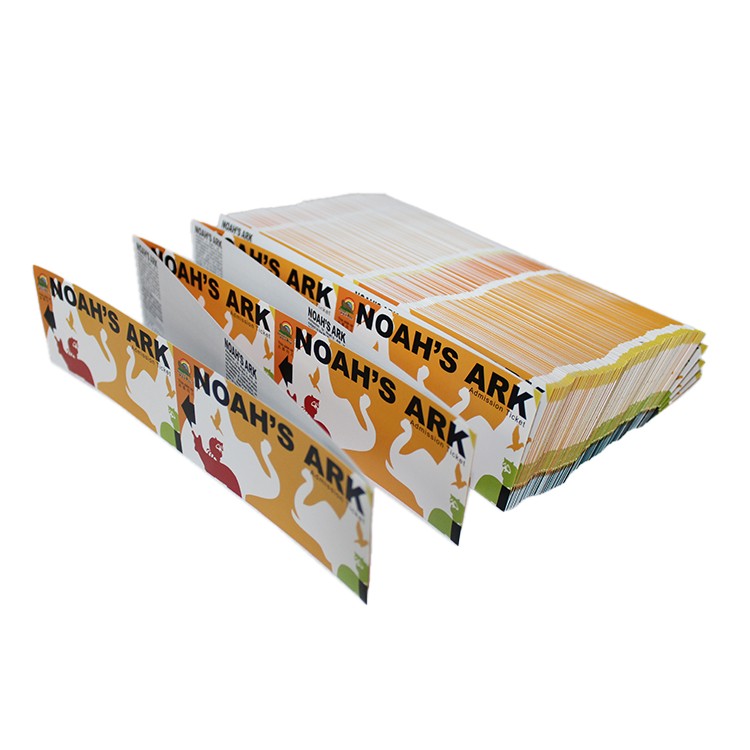
Why Does Printing Method Selection Affect Colour Consistency?
Colour consistency means more than making a printed image look attractive. It means reproducing an approved colour appearance across different copies, production batches, and, where applicable, different printing machines. For event organisers and ticketing operators, this matters because tickets are often part of a wider brand identity. A venue may use the same corporate colours on admission passes, promotional materials, signage, wristbands, and digital campaigns. If the printed ticket has a visibly different shade, the overall presentation can feel inconsistent.
Each printing process transfers colour to a substrate in a different way. The interaction between ink, paper coating, pressure, heat, and drying determines how the final colour appears. A colour specified in an artwork file does not automatically look identical on every paper grade. Uncoated paper, coated paper, and thermal paper can absorb or reflect light differently, changing the apparent density and saturation of the printed image.
Several production variables commonly influence colour variation:
- Ink formulation: Pigment concentration, viscosity, and drying characteristics affect colour strength and print stability.
- Substrate properties: Paper whiteness, coating, absorbency, surface smoothness, and texture influence colour appearance.
- Machine settings: Printing pressure, speed, registration, and ink transfer need to remain within controlled operating conditions.
- Environmental conditions: Temperature and humidity can influence paper dimensions, ink behaviour, and drying.
- Artwork preparation: Incorrect colour profiles, image resolution, or inconsistent file versions can create differences before printing begins.
- Finishing: Varnish, lamination, or other surface treatments can change gloss and perceived colour density.
For example, a dark corporate blue may appear slightly different on two paper grades even when the same ink formula is used. A glossy finish can make colours appear more saturated, while an absorbent surface may produce a softer appearance. Buyers should therefore approve colour samples on the actual intended substrate rather than judging the artwork only on a computer monitor.
Our production planning begins with the intended ticket application, the approved artwork, and the substrate requirements. A short-term event pass may prioritise cost-effective production and clear visual identification, while a premium admission ticket may require more detailed graphics and tighter brand-colour control. These differences influence which printing process is most appropriate.
Which Printing Methods Are Suitable for Different Ticket Designs?
No single printing method is best for every order. The choice depends on print quantity, artwork complexity, colour requirements, variable data, lead time, and the paper being used. A method that is economical for a large repeat order may be less suitable for a small batch with frequent design changes. Buyers should compare the complete production requirement rather than selecting a process based on one feature such as print speed.
Digital Printing for Flexible Artwork and Shorter Runs
Digital printing transfers artwork directly from a digital file to the printing system without requiring conventional printing plates. This makes it useful for short and medium production runs, customised designs, and jobs that contain changing information or multiple versions. It can also support detailed graphics, gradients, photographs, and full-colour artwork.
One practical advantage is the ability to make design changes without preparing a new set of plates. This can be useful when an organiser needs different event dates, venue names, sponsor logos, or ticket categories. Digital workflows can also support variable-data production when the equipment and software are configured for that purpose.
However, digital printing still requires colour management. The printer needs a suitable colour profile for the substrate, consistent calibration, and controlled operating conditions. Toner-based and inkjet systems also behave differently, so the appropriate settings depend on the equipment. Buyers should request a production sample using the intended paper and finishing process before approving a large order.
Offset Printing for Repeatable High-Volume Production
Offset printing transfers ink from a printing plate to a rubber blanket and then onto the substrate. It is widely used for commercial print production and can be suitable for larger ticket orders where consistent reproduction and efficient unit costs are important. It supports process-colour printing and can also use specially mixed spot colours for brand-critical designs.
Once the press has been correctly set up, offset printing can provide stable results across a substantial production run. However, make-ready and plate preparation add setup requirements, making the method less attractive for very small quantities or frequent artwork changes. Ink balance, water balance, printing pressure, registration, and substrate consistency all need to be controlled.
For brand colours that must closely match an established identity, a spot-colour specification can be useful. Rather than relying only on the combination of cyan, magenta, yellow, and black, the printer uses a separately formulated ink. The final result still depends on the paper surface and press conditions, so a physical proof remains important.
Flexographic Printing for Continuous and Roll-Based Production
Flexographic printing uses flexible relief plates to transfer ink onto a substrate. It is commonly used for labels, packaging materials, and roll-fed print applications. Depending on the equipment and substrate, it can support high-speed production and different ink systems.
For ticket-related products supplied in rolls or converted formats, flexographic printing may be considered where the order structure and material are compatible with the process. Anilox roller condition, plate quality, ink viscosity, impression pressure, and web tension all affect print consistency. Excessive pressure can cause distorted details or heavier-than-intended print, while insufficient ink transfer may create weak or uneven areas.
Flexographic printing can be a practical option for repeated designs and suitable continuous production jobs. Nevertheless, buyers should confirm that the selected press, plate configuration, and ink system can reproduce fine text, security graphics, and the required colour range.
Thermal Printing for Variable Ticket Information
Thermal printing is different from conventional full-colour printing. Direct thermal technology uses a heat-sensitive coating that darkens when activated by a thermal printhead. It is widely used for variable information such as dates, serial numbers, transaction details, and machine-readable codes. It is not generally the primary process for reproducing complex full-colour artwork.
For many ticketing workflows, pre-printed colour graphics can be combined with thermal printing at the point of issue. This allows the fixed design to be produced in advance while changing information is added when the ticket is issued. The thermal paper grade, printhead condition, temperature setting, and printer speed all influence the clarity of variable information.
The following comparison summarises the typical strengths and considerations of these methods.
| Printing method | Typical strengths | Important control points | Suitable applications |
| Digital printing | Flexible artwork changes, short runs, detailed graphics, full-colour customisation | Colour profiles, calibration, substrate settings, printhead or toner condition | Custom event tickets, multiple designs, shorter production runs |
| Offset printing | Efficient repeat production, process colours, spot-colour options | Ink balance, plate condition, registration, pressure, paper consistency | Large-volume orders and repeat ticket designs |
| Flexographic printing | Continuous production, roll-based workflows, compatibility with selected label materials | Anilox condition, plate quality, ink viscosity, impression pressure, web tension | Suitable roll-fed ticket and label applications |
| Thermal printing | Fast variable information printing without conventional ink or ribbon in direct thermal systems | Thermal coating, printhead condition, heat setting, speed, storage conditions | Dates, serial numbers, transaction details, barcodes, and QR codes |
Guang Dong-Hong Kong (GZ) Smart Printing Co., LTD. lists digital printing equipment and printing presses as part of its manufacturing operation. Its ticket product information also identifies customised designs and full-colour printing options. The specific method used for an order should be confirmed according to the artwork, quantity, substrate, and production requirements.
How Can Printers Control Colour from Artwork Approval to Final Inspection?
Even a suitable printing method cannot guarantee consistent results without a defined colour-control process. The most reliable approach is to establish an approved reference before production and use it throughout the job. This reference may include a physical colour proof, a digital colour target, specified spot-colour values, and documented substrate details. It gives the production team a consistent standard for checking whether the printed result remains within the agreed tolerance.
Colour management normally begins with artwork preparation. Designers should use the correct colour mode and output profile for the selected printing process. RGB artwork created for screens may need conversion to a print-ready CMYK workflow. If the design contains important brand colours, the buyer should identify them clearly and state whether a spot-colour match is required. Images should also have sufficient resolution to avoid blurred edges and inconsistent detail.
Once artwork is approved, the printer should confirm the substrate and establish machine settings. A change in paper grade can alter the appearance of the same ink, so switching materials during a repeat order should trigger a new assessment. The press operator should monitor ink transfer, registration, density, and other process variables at suitable intervals.
Useful colour-control practices include:
- Use an approved proof: Confirm the visual appearance on the intended material before releasing the full order.
- Maintain colour profiles: Use profiles suited to the printing process and substrate rather than applying one setting to every material.
- Control ink or toner: Monitor ink formulation, viscosity, density, and equipment condition according to the process.
- Check registration: Ensure that different colour layers align correctly, particularly in small text and detailed graphics.
- Keep material consistent: Record the approved paper grade and surface treatment for repeat production.
- Inspect throughout the run: Compare samples from the beginning, middle, and end of production to identify drift.
- Document approved settings: Retain job specifications and reference samples to support repeat orders.
Colour measurement can make inspection more objective. A spectrophotometer measures reflected light and provides colour data that can be compared with an agreed reference. One commonly used approach is to evaluate colour difference using a Delta E value. The acceptable tolerance should be agreed between the buyer and manufacturer because the required precision depends on the design, substrate, and commercial application. It would be misleading to apply one universal tolerance to every ticket order.
Visual inspection remains valuable as well. A measured colour difference may be technically small but still noticeable in a design with large solid-colour areas. Conversely, a subtle variation in a complex image may be less important to the buyer. A sensible quality plan combines instrumental measurement with visual approval under consistent lighting conditions.
Our quality checks should also consider the finished ticket rather than only the printed sheet. Cutting, folding, perforation, lamination, and other converting operations can expose defects that were not obvious during the initial press check. For example, a security graphic may be damaged by an unsuitable finishing process, or a glossy surface may create reflections that make a code harder to scan.
What Product Specifications Should Buyers Confirm Before Ordering?
Colour quality is closely linked to the ticket's material and construction. A buyer selecting a product should confirm the paper grade, printing requirements, ticket format, and any additional security elements before production. The company's published ticket information provides several material and product details that can help define the initial specification.
| Product detail | Published information | Why it matters to print quality |
| Entrance ticket material | BAIQIANG TC series high-gram thermal paper | Paper stiffness and surface properties influence handling and the appearance of printed graphics. |
| TITO ticket material | BAIQIANG NTC series thermal paper | Material compatibility is important for pre-printing and subsequent thermal information printing. |
| Paper characteristics | High grammage and good stiffness are stated for entrance ticket paper | Helps the ticket retain its form during handling and processing. |
| Thermal paper options | BPA-free material options are listed | Buyers can request product-specific material declarations for procurement review. |
| Printing options | Custom and generic imprints; full-colour printing options | Supports event branding, ticket categories, logos, and customised artwork. |
| Ticket formats | TITO ticket books of 200, 400, and 600 | Book format and finishing should match the issuing and handling workflow. |
| Security features | Colour printing, barcodes, QR codes, and fluorescent anti-counterfeiting options | Security graphics and machine-readable elements require clear reproduction and verification. |
| Paper sourcing | FSC-certified options are listed | Provides a sourcing option for buyers with responsible-paper procurement requirements. |
These published details describe available product options rather than a universal specification for every order. Exact dimensions, grammage, roll or sheet configuration, colour tolerance, and finishing details should be confirmed on the order specification. Buyers should also provide the intended printer or ticketing system information when the finished product will be used in automated equipment.
For a customised order, our team should receive the final artwork, preferred colour references, paper requirements, quantity, ticket format, and security specifications. Where colour matching is particularly important, a signed physical proof can serve as the agreed reference for production and future repeat orders.
Conclusion: How Can Buyers Maintain Consistent Colour Across Ticket Orders?
Consistent colour quality depends on choosing a printing method that fits the order and controlling every stage from artwork preparation to final inspection. Digital printing offers flexibility for customised designs, offset printing supports repeatable high-volume production, and flexographic printing can suit compatible roll-based applications. Thermal printing is useful for variable information, while full-colour graphics generally require a separate printing process. Substrate selection, colour profiles, ink control, registration, and proof approval all contribute to a dependable result.
Guang Dong-Hong Kong (GZ) Smart Printing Co., LTD. offers customised ticket printing options supported by coating, printing, and converting capabilities. If you are planning a new ticket design or need more consistent colour across repeat orders, contact our team with your artwork, paper requirements, order quantity, and colour references. We can review the application and help identify a suitable production approach for your ticketing needs.
Frequently Asked Questions
Which printing method is best for maintaining consistent brand colours on tickets?
The best method depends on order volume, artwork, substrate, and colour requirements. Offset printing can be suitable for large repeat orders and spot-colour work, while digital printing offers flexibility for customised designs and shorter runs. In either case, an approved proof, suitable colour profile, consistent paper grade, and documented inspection criteria are important for maintaining repeatability.
How can buyers check whether printed ticket colours match the approved design?
Buyers can compare production samples with an approved physical proof under consistent lighting and use a spectrophotometer to measure colour difference against the agreed reference. The acceptable Delta E tolerance should be specified before production because different designs and substrates may require different levels of precision. Samples should also be checked for registration, print density, and finishing effects.
Can thermal ticket paper produce full-colour printing?
Direct thermal printing itself normally produces an image through a heat-sensitive coating and is primarily used for variable information rather than complex full-colour graphics. A ticket can, however, be pre-printed with colour artwork and then receive changing details such as dates, serial numbers, or codes through a thermal printer. The paper must be compatible with both the pre-printing process and the final thermal printing equipment.