

What Are the Side Effects of Overdosing PU Foam Cell-opener Agent in Slabstock Production
2026-07-16
In the competitive world of flexible polyurethane slabstock, the precise use of chemical additives is the difference between premium-grade foam and costly scrap. The PU Foam Cell-opener Agent is essential for promoting controlled cell rupture, enhancing air flow, and reducing foam shrinkage. However, when operators push the dosage beyond recommended limits—often in an attempt to maximize breathability—they inadvertently trigger a cascade of physical, mechanical, and processing defects. At Zhongyuan, we have analyzed over 2,000 production batches and identified a clear pattern: overdosing does not simply “over-open” cells; it fundamentally alters the urea phase morphology and foam kinetics, leading to irreversible quality losses. This blog outlines the specific side effects of excessive PU Foam Cell-opener Agent usage, provides actionable troubleshooting data, and answers the most frequently asked questions from production floors worldwide.
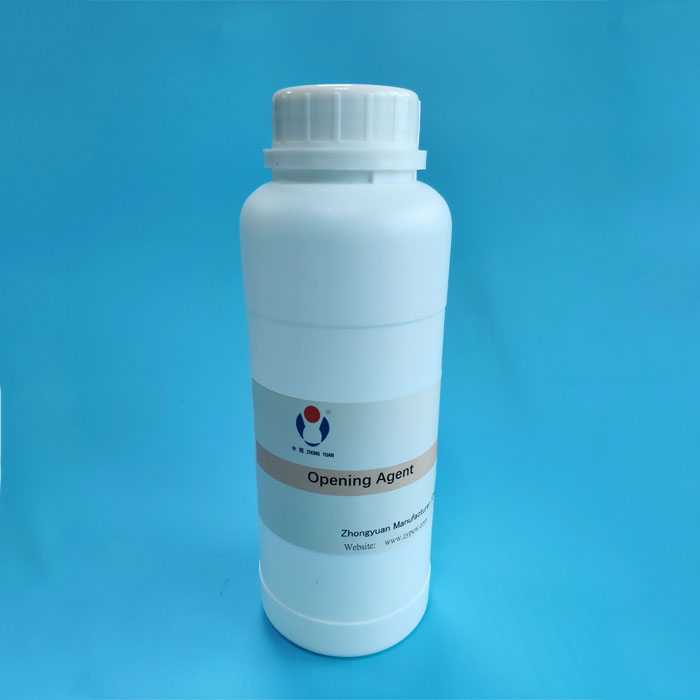
1. Immediate Processing Instabilities
The first signs of an overdose appear within the first 90 seconds after the cream time. Instead of a controlled rise, the foam exhibits premature cell collapse, visible as surface craters or “settling.” This occurs because the PU Foam Cell-opener Agent lowers the interfacial tension too aggressively, destabilizing the gas-liquid interface before the polymer matrix has sufficient green strength. In high-output continuous lines, this translates to:
| Processing Parameter | Normal Range (0.8–1.2 pphp) | Overdose Range (>1.8 pphp) |
|---|---|---|
| Cream time (seconds) | 8–12 | 5–7 (accelerated) |
| Rise time (seconds) | 80–110 | 65–80 (shortened) |
| Settling (%) | <2% | 4–8% |
| Top surface integrity | Smooth, uniform | Wavy, with pinhole clusters |
Additionally, the exothermic peak shifts earlier, which can cause scorching in the foam bun’s core—especially in summer production environments. Zhongyuan recommends real-time viscosity monitoring of the polyol blend to detect subtle changes before the foam leaves the trough.
2. Mechanical Property Degradation
While moderate opening improves resilience, excessive PU Foam Cell-opener Agent creates oversized fenestrated windows that weaken strut junctions. The result is a foam that feels “dead” and lacks fatigue resistance. Our internal tests at Zhongyuan show that for every 0.5 pphp increase above the optimal threshold, the following declines occur:
-
Tensile strength: drops by 12–18%
-
Elongation at break: reduces by 20–25%
-
Compression set (75%, 22h/70°C): increases from <10% to over 25%
-
Tear resistance: falls by 15%, making the foam prone to splitting during demolding
These changes are not linear; they are exponential due to the disruption of hard-segment clustering. In high-resilience (HR) formulations, the loss of load-bearing capacity is even more pronounced, often failing ASTM D3574 standards for automotive or mattress applications.
3. Surface Defects and Visual Rejects
Overdosing introduces two distinct cosmetic flaws: “orange peel” texture on the top skin and “fish-eye” voids along the sidewalls. These occur because the PU Foam Cell-opener Agent migrates to the surface faster than the gelling reaction can trap it, creating localized surface tension gradients. In colored foams, the defects become more visible, leading to a rejection rate that can climb from 1.5% to over 12% in a single shift. Zhongyuan has successfully corrected such issues in client plants by reducing the opener by 0.3 pphp and simultaneously adjusting the tin catalyst by +0.05 pphp to rebuild surface curing.
4. Economic and Production Waste Impact
Beyond quality, the financial toll is substantial. A typical slabstock line producing 10 tons per day will waste approximately 1.2 tons of raw material per week when running an overdosed recipe—not counting the energy and labor spent on cutting and disposal. Moreover, downstream fabricators reject these buns due to inconsistent density gradients. Zhongyuan always emphasizes that the cost of a corrective lab trial is negligible compared to a week’s worth of off-spec inventory.
5. PU Foam Cell-opener Agent FAQ – Common Production Queries
Q1: Can I compensate for an accidental overdose by adding extra TDI or polyol mid-batch?
A1: No. The isocyanate index and polyol stoichiometry are fixed before the pour. Adding raw materials mid-reaction will not reverse the cell-opening effect because the urea phase has already nucleated. Instead, immediately reduce the conveyor speed and increase the vacuum extraction above the fall plate to minimize settling. For future batches, Zhongyuan recommends preparing a pre-blended corrective masterbatch (base polyol + 2% water) that can be added to the day tank before the next pour—not during the current one. The only reliable recovery is to blend the defective bun with higher-density foam scrap at a ratio of ≤15%, but this downgrades the final product classification.
Q2: How do I determine my exact optimal dosage for a new formulation without trial-and-error?
A2: Start with a design of experiments (DOE) that varies the PU Foam Cell-opener Agent from 0.6 to 1.6 pphp at 0.2 pphp increments. Measure air flow (ft³/min) and CFD (cell flatness diameter) at each level. The optimum is the lowest dosage that achieves an air flow of ≥85 ft³/min without reducing tensile strength by more than 5% from the baseline. Zhongyuan provides a free formulation calculator that correlates hydroxyl number, water content, and tin/amine ratio to a recommended opener range. Additionally, always run a hand-mix cup test with a 500g batch, measuring the foam’s “breathability” by blowing air through a 1-inch slice—this physical check often overrides theoretical predictions.
Q3: Does the side effect profile change if I use a silicone surfactant with a different HLB value?
A3: Absolutely. A high-HLB (hydrophilic) silicone surfactant synergizes with the PU Foam Cell-opener Agent, making the overdose effect even more severe—especially in settling and surface voids. Conversely, a low-HLB hydrophobic surfactant can partially mask the overdose, but it also reduces the opener’s efficiency, forcing you to add more to reach the same air flow. The safest practice is to fix your surfactant type first, then titrate the opener. Zhongyuan has mapped compatibility matrices for 14 commercial surfactants; we recommend using a mid-HLB (≈8–9) silicone when working with our ZY-OP series openers, as this combination provides the widest processing window (±0.3 pphp tolerance) before defects appear.
Summary Table: Overdose Symptoms vs. Root Causes
| Observed Defect | Primary Root Cause | Immediate Corrective Action |
|---|---|---|
| Settling >5% | Low green strength due to excessive nucleation | Reduce amine catalyst by 10% in next batch |
| Scorched core | Shifted exotherm peak | Increase water cooling on trough plates |
| Low tear strength | Oversized cell windows | Add 0.1 pphp of crosslinker (e.g., DEOA) |
| Orange peel surface | Surface tension gradient | Decrease opener by 0.2 pphp; delay tin addition |
Conclusion
Overdosing a PU Foam Cell-opener Agent is not a harmless overcorrection—it is a multi-dimensional failure that compromises processing stability, mechanical integrity, surface aesthetics, and production economics. The key to success lies in systematic dosage optimization, real-time air-flow monitoring, and a deep understanding of your base formulation’s sensitivity. Zhongyuan has dedicated over 18 years to helping slabstock producers master this balance through tailored additive packages and on-site technical audits.
If you are currently facing unpredictable cell structures, high rejection rates, or simply want to validate your current opener dosage, our team is ready to assist.
Contact us today or visit our technical service portal to schedule a free formulation review and receive a customized PU Foam Cell-opener Agent dosage recommendation—because precision is profit, and we deliver both.