

How Can Puffy Stickers Support Product Differentiation in Competitive Retail Markets?
2026-11-26
How Do Raised Decorative Details Help Products Stand Out on Retail Shelves?
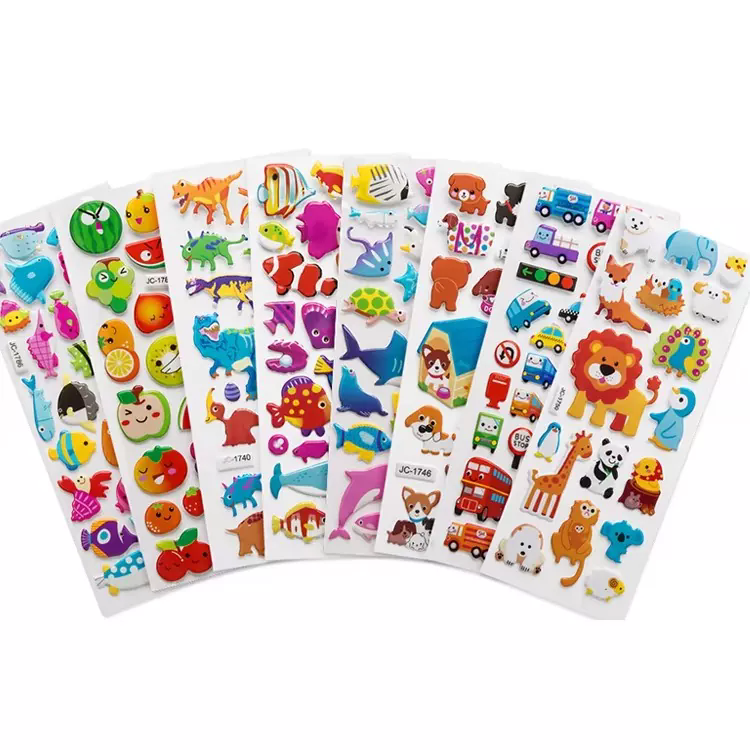
Puffy Stickers can help brands differentiate products in competitive retail markets by adding a raised visual element that makes packaging, stationery, and decorative merchandise more distinctive. When shoppers compare several products in the same category, differences in colour, layout, and product features can be subtle. A dimensional sticker introduces another point of distinction through its visible height, tactile surface, and customised outline. Rather than changing the entire package design, brands can use a carefully positioned raised graphic to highlight a character, logo element, decorative motif, or product theme.
Retail differentiation is not simply about making a package look busier. It is about giving shoppers a clear reason to notice one product and understand its identity. A raised decorative element can create a focal point on a toy package, add personality to a stationery collection, or support a coordinated theme across seasonal merchandise. Its effectiveness depends on the relationship between the sticker, the product, and the surrounding packaging. If the raised detail competes with essential product information, the result may look cluttered. If it is used selectively, it can contribute to a more recognisable presentation.
For retailers and brand owners, the application should determine the construction. A stationery product may benefit from a moderate raised profile that feels appropriate for everyday handling, while a toy package or retail display may call for a more pronounced dimensional effect. The product options supplied by Wenzhou Create Fun Craft Co., Ltd. include 1.5 mm foam with medium-tack adhesive for journaling and stationery, as well as 3 to 5 mm foam with high-tack adhesive for toy packaging and retail displays. These application-based choices give buyers a starting point for matching the product's appearance and attachment requirements.
There are several ways this dimensional feature can support product differentiation:
- Visual recognition: A raised character, icon, or motif can create a distinct visual feature that shoppers may recognise across a product range.
- Category positioning: Different outlines and finishing choices can help communicate whether a product belongs to a playful toy range, a creative stationery collection, or a decorative gift assortment.
- Tactile appeal: The raised surface gives customers a physical detail to explore, adding another dimension to the product presentation.
- Range consistency: Coordinated designs can connect several product variants while allowing each one to retain its own colour scheme or graphic theme.
- Packaging enhancement: A selected raised detail can add depth without requiring a complete redesign of the printed package.
Our approach to product selection begins with the commercial purpose of the decoration. A retailer preparing a back-to-school stationery range may prioritise coordinated illustrations and a manageable raised profile. A toy brand may want a more noticeable dimensional feature that reinforces the product's theme on the front of the pack. Our factory can discuss the available thickness and adhesive combinations according to the stated application, while the final choice should be confirmed through sample evaluation.
Brands should also consider where shoppers will see the product. A package displayed upright on a shelf presents its front panel differently from a stationery item arranged in a countertop organiser or a gift product placed in a promotional display. The position of the raised element, the lighting in the retail environment, and the colour contrast with the printed background all influence the finished appearance. A well-planned design makes the decorative feature easy to notice without reducing the readability of product names, instructions, or other essential information.
Which Product Specifications Influence Appearance and Application Performance?
Product differentiation depends on more than the artwork. Foam thickness, adhesive tack, surface finishing, and die-cut shape all influence how a sticker looks and how it works in its intended setting. Buyers should evaluate these elements together because a visually attractive sample is not automatically suitable for every receiving surface. A specification that works for a journal may not be the right choice for a retail package that is handled during packing, transport, and shelf replenishment.
The current application-based options can be summarised as follows:
| Application | Foam thickness | Adhesive option | Primary consideration |
| Journaling and stationery | 1.5 mm | Medium-tack | A moderate raised profile for stationery and creative use. |
| Toy packaging and retail displays | 3 to 5 mm | High-tack | A more pronounced dimensional effect with a stronger adhesive option. |
The 1.5 mm foam option is intended for journaling and stationery. Its medium-tack adhesive provides an application-specific starting point for products that are handled directly by end users. In this category, the design may be part of a planner, journal, decorative sheet, or stationery set. Buyers should consider the thickness in relation to the page layout and the way the finished item will be stored or used. A raised element should add visual interest without making the overall design feel unnecessarily bulky.
The 3 to 5 mm foam option is intended for toy packaging and retail displays. It creates a more pronounced raised profile and is paired with high-tack adhesive. This combination may be relevant when a decorative feature needs to remain attached during ordinary packaging and display handling. However, the term high-tack does not establish universal compatibility. The actual result depends on the receiving material, its surface finish, the sticker's placement, and the application conditions. Buyers should test the proposed construction on the material used for the final product.
Foam thickness and adhesive tack serve different purposes. Thickness affects the dimensional appearance, while adhesive tack relates to attachment. Increasing the foam thickness does not automatically improve adhesion, and selecting a stronger adhesive does not guarantee suitability for every substrate. Our technical discussion should therefore cover both the intended visual effect and the surface receiving the sticker. Where possible, buyers should provide a representative packaging sample or identify the material and finish accurately.
Surface finishing provides another way to distinguish a product. Available options include double-layer lamination, partial hot stamping, glossy lamination, and matte lamination. Each creates a different visual result:
- Double-layer lamination: Can be considered when a layered surface treatment is part of the design direction. The finished sample should be checked for its overall appearance and feel.
- Partial hot stamping: Highlights selected areas with a metallic-style accent. It is generally more effective when applied to a specific graphic detail rather than used indiscriminately across the design.
- Glossy lamination: Creates a reflective surface appearance that may suit bright, colourful, or high-contrast artwork.
- Matte lamination: Offers a less reflective finish that may coordinate better with restrained packaging or understated stationery designs.
- Custom die-cutting: Allows the outline to follow the intended graphic shape, such as a character, symbol, or decorative motif.
Custom die-cutting is particularly useful when the outline itself contributes to product identity. A character-shaped sticker, for example, can reinforce the theme of a toy or stationery range more clearly than a standard geometric shape. The cutline should be reviewed alongside the artwork to make sure the outline looks balanced and follows the intended design. Buyers should also check the finished sample rather than relying only on a digital proof, because the physical raised profile can change how the outline appears.
Some technical details still need to be confirmed for each order. The available product information does not establish universal dimensions, foam density, face-material composition, colour range, adhesive strength values, peel strength, temperature resistance, waterproof performance, or service life. These should not be assumed from the thickness and tack descriptions. Create Fun can discuss the stated construction options, while any additional technical requirement should be confirmed for the specific design before production approval.
How Can Brands Use Custom Design to Build a Recognisable Product Range?
Custom design is most effective when it supports a consistent brand identity. A sticker should not look like an unrelated accessory added at the last minute. Its shape, colours, surface treatment, and placement should connect with the product's packaging and the wider visual language of the range. This is particularly important for retailers selling multiple variations of a product. A coordinated design system can make the collection easier to recognise while still allowing individual items to communicate different themes, characters, or seasonal messages.
For example, a stationery range might use a shared illustration style across several designs, with different motifs or colour combinations for individual products. A toy brand could use a recurring character style while adjusting the artwork to match each product theme. Gift and promotional merchandise may use a recognisable graphic element that connects the sticker with the campaign or occasion. These approaches allow decoration to contribute to product identity instead of functioning as an isolated visual extra.
When planning a custom design, buyers should review five areas:
- Graphic identity: Decide which character, logo element, symbol, or illustration should be the main visual feature.
- Shape and outline: Determine whether a custom die-cut shape will communicate the theme more effectively than a conventional outline.
- Colour coordination: Compare the artwork with the package background and the colours used across the product range.
- Surface treatment: Choose whether the design needs double-layer lamination, partial hot stamping, glossy lamination, or matte lamination.
- Application suitability: Confirm that the foam thickness and adhesive option are appropriate for the receiving surface and intended handling.
A useful design review also considers the amount of visual information on the package. Retail packaging often includes product names, feature descriptions, age guidance, barcodes, instructions, and other information. The raised decorative feature should have a clear position within this hierarchy. It can draw attention to the product theme, but it should not cover important text or make the package difficult to read. A clean layout with one recognisable focal point may be more effective than a design in which every area competes for attention.
Our customisation discussions focus on the relationship between artwork and the finished application. Buyers can provide design files and explain the intended product category, receiving surface, and preferred visual effect. Comparative thickness samples can then help the team assess the dimensional profile before selecting a final construction. This is particularly useful when the design is being developed for a new retail range and the buyer has not yet decided how prominent the raised effect should be.
Sample approval should cover more than colour and shape. The buyer should record the selected foam thickness, adhesive option, finishing process, cutline, and receiving surface. If the sticker will be applied to packaging, the sample should be tested on the actual package material or a representative sample. If the design is intended for stationery, it should be reviewed in the context of the finished paper product. A clear record helps prevent a later production discussion from relying on an incomplete visual reference.
Brands should also be careful when adapting an approved design to a new application. A construction selected for a journal should not automatically be transferred to a toy package or display. The receiving surface and handling requirements may differ, so the adhesive and thickness should be reviewed again. The same principle applies when a package changes from an uncoated paper surface to a coated or laminated material. A change in substrate can affect the application result and should trigger a new suitability check.
What Should Retail Buyers Confirm Before Approving a Bulk Order?
Bulk purchasing requires a clear specification that connects the design with the physical product. A buyer may have approved the artwork, but that does not necessarily mean every production detail has been settled. The final purchase specification should identify the intended application, artwork version, die-cut outline, foam thickness, adhesive option, and finishing process. Any additional requirement should be confirmed in writing so that both parties are working from the same reference.
A practical pre-order checklist includes the following items:
- Final artwork and approved design version.
- Intended use, such as journaling, stationery, toy packaging, or retail display.
- Receiving surface and package material.
- Selected foam thickness and adhesive tack.
- Chosen finishing process and the areas where it will be applied.
- Approved die-cut outline and sample appearance.
- Any additional dimensions or material requirements confirmed for the order.
- Order quantity, packaging expectations, and requested delivery schedule.
Sample evaluation should be carried out under conditions that reflect the product's intended use. Buyers should inspect the raised profile, surface finish, outline, and overall appearance. They should also apply the sample to the intended substrate and assess whether the attachment is suitable for the expected handling. If the product will be packed, stacked, or displayed in a particular way, those conditions should be considered during the review. A desk inspection alone may not reveal every issue that could appear during normal distribution and retail handling.
It is equally important to distinguish between confirmed specifications and requested performance targets. If a buyer needs a particular adhesive strength, environmental resistance, or service-life value, the requirement should be discussed and supported by product-specific information. It should not be inferred from a general description such as high-tack adhesive. This approach helps buyers compare quotations fairly and avoids adding unverified claims to product packaging or purchasing documents.
Our factory recommends keeping an approved physical sample or a complete specification record for repeat orders. If the artwork, receiving surface, or intended use changes, the buyer should review whether the existing construction remains suitable. This is a straightforward way to maintain consistency across product batches while allowing the design to evolve when a new retail collection or promotional campaign is introduced.
Conclusion
Product differentiation in retail depends on clear visual identity, suitable materials, and a presentation that fits the way customers encounter and handle an item. Puffy Stickers can contribute through their raised profile, custom outlines, and finishing options, but the best result comes from matching the construction to the application. The 1.5 mm foam and medium-tack option is specified for journaling and stationery, while the 3 to 5 mm foam and high-tack option is intended for toy packaging and retail displays. Buyers should confirm the receiving surface, finish, and final sample before approving production.
Wenzhou Create Fun Craft Co., Ltd. can discuss the available constructions and finishing choices according to your product requirements. Share your artwork, intended application, and packaging material to review suitable options and request a quotation. A clear brief and an approved sample provide a practical starting point for developing distinctive retail decoration with a specification that matches the finished product.
Frequently Asked Questions
1. Can raised foam stickers be used on both stationery products and retail packaging?
Yes. The suitable construction depends on the application. The stated option for journaling and stationery is 1.5 mm foam with medium-tack adhesive, while toy packaging and retail displays are matched with 3 to 5 mm foam and high-tack adhesive. Buyers should test the proposed adhesive on the actual receiving surface before confirming an order.
2. Which custom finishes can help a sticker design look different from competing products?
Double-layer lamination, partial hot stamping, glossy lamination, matte lamination, and custom die-cutting are available finishing options. Partial hot stamping can highlight selected graphic details, while glossy and matte lamination create different surface appearances. Custom die-cutting can make the outline follow a character or brand-related motif. The final combination should be assessed against the package design and approved sample.
3. What should buyers check when evaluating a sample for bulk production?
Buyers should check the artwork, cutline, foam thickness, adhesive option, surface finish, and appearance on the intended receiving material. The sample should also be applied to the actual or representative substrate to assess attachment under expected handling conditions. Any additional requirements, including dimensions or specific adhesive performance values, should be confirmed for the exact product rather than assumed.